NASA/JPL/University of Arizona
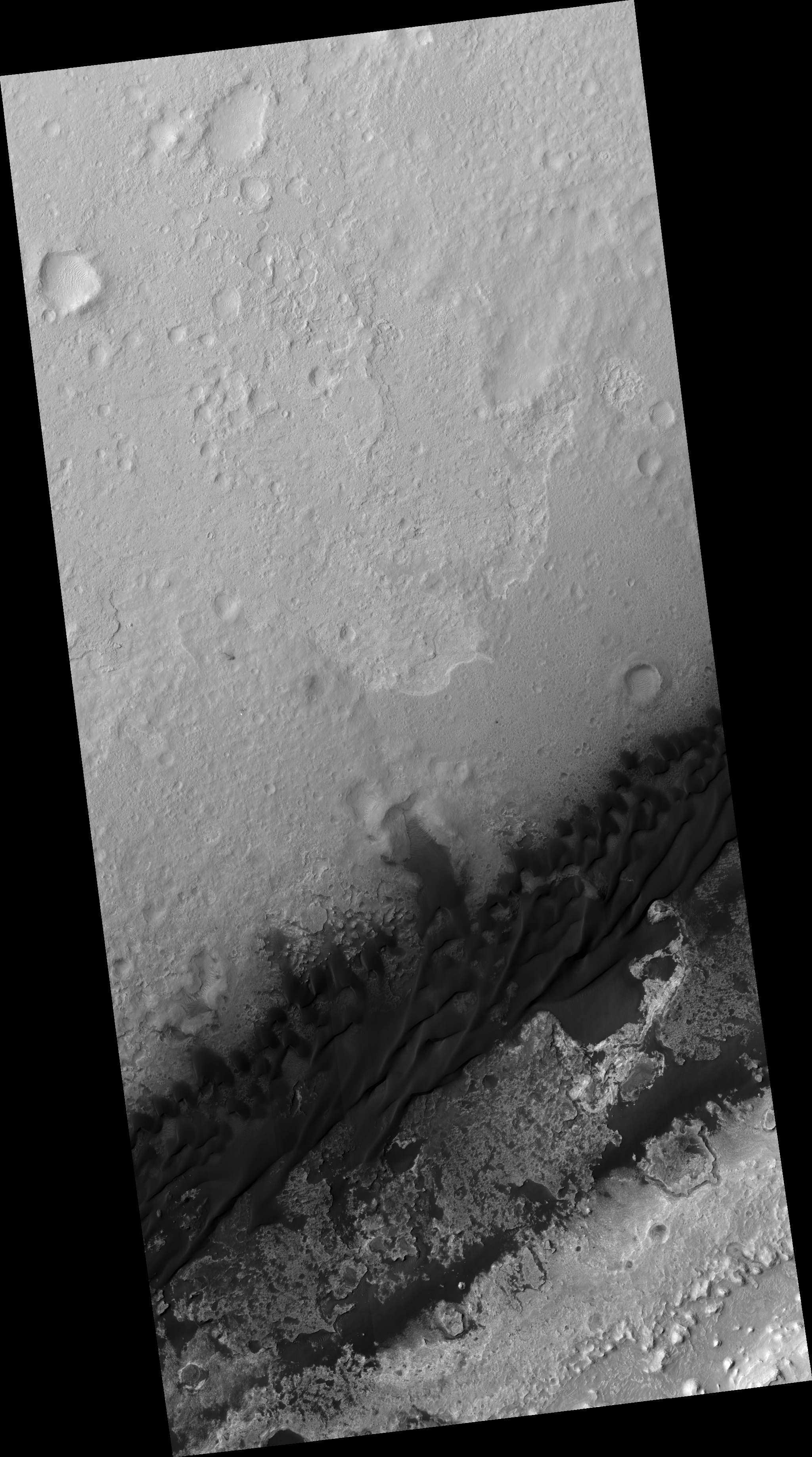
This is the third HiRISE image of MSL on the ground, a less oblique image with slightly higher resolution than the previous images.
The subimage shows a 4x reduced-scale overview, keyed to full-scale cutouts.
The new dark spots (left side) created streaks radial to the descent stage impact site, and may be from far-flung rocks or objects associated with the impact. There are 7 bright spots associated with the descent stage crash site as well that may be pieces of hardware.
There are also bright pieces scattered around the backshell, mostly downrange, and interesting detail in the parachute.
You can see the shadow of the MSL mast extending southeast (downsun) from the Curiosity rover.
This image was acquired looking more directly down (9 degree roll angle) than the prior images so the pixel scale is improved to approximately 0.27 m/pixel. Each cutout is individually stretched to best show the information without saturation. A special noise cleaning method was applied to the images by Paul Geissler of USGS.


No hay comentarios:
Publicar un comentario